
As a dog trainer and active foster, I have introduced a lot of dogs to a lot of other dogs. Clients’ dogs, foster dogs, resident dogs, dogs who have a long learning history of struggling with other dogs, dogs who want to play, dogs who are asocial but don’t want to play, frustrated dogs and dogs who are simply unsure. Over the years, one method has consistently stood out as the safest, least stressful, and most effective way to introduce unfamiliar dogs: parallel walks.
Many people think that dog introductions should happen face to face, on leash, with a quick sniff and hope for the best. In reality, that setup puts a lot of social pressure on dogs before they have had a chance to gather information or feel safe. Dogs do not need to meet head-on to decide how they feel about each other. In fact, that is often the fastest way to create tension and result in a sniff-sniff-grrrrr-grrrr-grrrr-snap, all in about the span of 3 seconds!
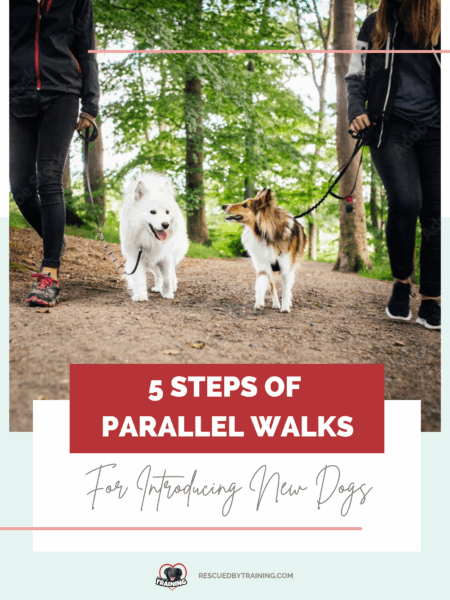
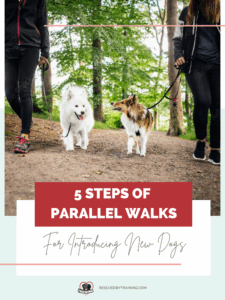 Parallel walks flip the script. Instead of forcing interaction, we allow dogs to move together in the same direction, at a distance, with plenty of space to observe and decompress. Grab my free 5 Steps to Parallel Walks guide here!
I see this play out regularly with clients. One recent client was trying to introduce their dog to a friend’s dog who would be visiting often. Both dogs were friendly in general, but leash greetings had already gone poorly. Barking, stiff bodies, lots of pulling, dogs choking themselves. The humans assumed the dogs “just didn’t like each other.” This is also where having a solid understanding of dog body language is critical. Grab my free dog body language and communication course here!
What they actually needed was space, structure and time to decide what they felt about each other. As humans we tend to make some big assumptions about dogs and who we think they should like or not and commonly people think all dogs should like all other dogs. Well, I’ve got news for you. I’m a pretty social person but I definitely do not like all other humans and the expectation that all dogs should like all other members of their species sets everyone up to fail. Dog sociability is a spectrum, like so many things. It’s not all black or white.
We started in a neutral location with both dogs about 30 to 40 feet apart, walking in the same direction. Every time one dog noticed the other, the handler marked “yes” and delivered high value food. It did not matter if there was barking at first. Noticing the other dog predicted something good. Within minutes, both dogs softened a bit. The barking decreased, their bodies loosened, and they began checking in with their handlers instead of locking onto each other.
Over 2 sessions, we gradually closed the distance. Ten feet. Then closer. Then we rotated positions so instead of the dogs being on the outside of the humans, far away from each other, one dog was rotated in, so if you were looking at them it would be dog-person-dog-person. We encouraged sniffing of the ground, urine, and other natural scent information. Only when the dogs were showing loose, comfortable body language did we allow brief rear-end sniffing, feeding while it happened.
By the time we worked through the plan, they were ready to be off leash together in a secure area. But there was no big moment, no explosion of excitement or tension. Just two dogs who already felt neutral and safe around each other.
My fostering experience has reinforced this even more. Foster dogs often come with unknown histories, and many are already overwhelmed coming to us right from the shelter. My husband and I always to a parallel walk to give us a way to introduce the foster to our own dog without adding pressure. I am not asking them to be social or play, I am simply letting them exist in proximity with each other. Over and over, I have watched dogs who seemed reactive, frustrated or selective feel safer when given this option. Grab my Fostering 101 course here!
This is the key takeaway. My goal for initial dog introductions is not instant friendship – it is safe coexistence. Indifference is a win.
Parallel walks allow dogs to build positive associations at their own pace. They help reduce the risk of conflict and frustration and they give dogs choice and agency.
Just like with so many other things in training, slow is not a failure. Slow is thoughtful and can lead to bigger successes later on.
If you are introducing your dog to a new dog, whether a neighbor, a family member’s dog, or a potential new addition to your household, resist the urge to rush. Start with space. Move together. Let the relationship unfold gradually.
Relationships are not forged in the first meeting, or even in the first hours or days. Successful relationships take time to develop. Give your dogs that gift. Your dog will thank you for it.
If you would like a clear, visual roadmap to follow, I have created a free downloadable guide that breaks this process down into 5 simple steps for parallel walks. It outlines where to start, how to close distance safely, when to rotate positions, and how to know when your dogs are ready to move forward. This is the same framework I use with clients and with my own foster dogs.
You can download the Free 5 Steps to Parallel Walks guide here and use it as a reference anytime you are introducing unfamiliar dogs. Having a plan takes the guesswork out of introductions and helps everyone slow down, stay consistent, and set the dogs up for success.
If you need help, please reach out for help and let’s make a plan. Schedule your session here!
If you would like to support my efforts and make a contribution to allow me to continue to create free resources like my blog and all of my other free resources, you can Buy Me A Coffee!

Happy training!

Proud Partner Of The Farmer’ Dog. Get a special discount on your first box.

(This post contains affiliate links. If you click the link, I earn a small commission, at no extra cost to you.)