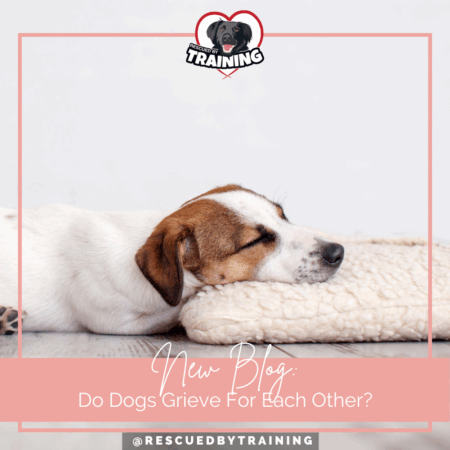

In my doula and pet loss grief work I often get called on to help a family not just with their grief but with other animals at home who are missing the animal that passed away. This is a topic I’ve been interviewed about here and here. In the wild, we have many examples of animals grieving – elephants, dolphins, wolves, and this mother orca pushing her dead baby, just to name a few. And they understand death. Chimps are known to clean the teeth of their dead, crows often avoid the places where they saw a carcass and elephants have been suspected of burying their calves. When any family member, human or animal, dies or becomes ill, everyone is aware of it and in fact, dogs’ incredible sense of smell likely makes them aware of physical changes before we are.
There is not a huge body of research on this topic, and we must be careful not to over-anthropomorphize. Still, dogs are deeply aware of our routines and emotions and just because they may not have the same emotional response that humans do, doesn’t necessarily mean they’re not affected. What we label as grief in dogs may sometimes be a response to the changes in the household that follow a death. Humans are upset and emotional, routines change, and those changes can be upsetting for the remaining dog and may look like grief.
Dogs are social animals that rely on relationships and social groups for security, so when a housemate or family member is lost, that social structure is disrupted and can cause anxiety. Dogs are known to experience distress when separated from an individual to whom they are strongly attached, whether human or animal. When a housemate dies, that permanent separation can lead to separation-related behaviors similar to diagnosed separation anxiety.
There is a paper from 2022 on the topic that has some key takeaways to support behavioral changes in dogs after the loss of another dog in the home. The authors were careful to say we cannot definitively label these changes as grief, but they did document behavioral shifts with 86% of surviving dogs showing negative behavior changes after the death of a housemate dog.
- Key behavioral changes noted were:
-
- Attention seeking behaviors increased (67%)
- Playing less (57%)
- Overall reduced activity (46%)
- Increased sleeping (35%)
- Increased fearfulness (35%)
- Decreased appetite (32%)
- Increased vocalization (30%)
- Timing and relationship patterns:
-
- These behavioral changes were observed most often between two and six months after the loss (32.2%), with 29.4% showing changes for less than two months and 24.9% showing changes for longer than six months. In 13.4% of cases no negative behavioral changes were reported.
- Dogs in friendly relationships with the deceased were more likely to show decreased activity and play, and increased sleeping and attention seeking. Dogs that had antagonistic or tolerant relationships showed no significant change.
- Parental relationships with the deceased were associated with decreases in activity, play, and eating, and increases in attention seeking, fearfulness, and vocalizing.
- Interestingly, the length of time the dogs lived together did not predict behavior change. This suggests the quality of the relationship matters more than its duration.
We cannot ignore the human side. Higher anger and grief scores in humans were correlated with increased fearfulness in surviving dogs. Guardians who experienced anger were more likely to report increased fearfulness in their dogs, and those experiencing grief were more likely to report decreased appetite and increased attention seeking. Fear can be transmitted through sight, sound, and smell, so it is possible that dogs are responding to changes in their humans rather than directly to the loss of their canine companion. Humans often alter their behavior toward the surviving dog after a loss, offering more snuggles and attention. Those behavior changes in humans can drive anxiety and fear in dogs.
So, do dogs grieve? Maybe but not necessarily in the same way we think of grief. Even if it’s not the same, we still need to help our remaining animals navigate the loss. And allowing your other resident animals to be present for the euthanasia can help – I think animals understand death, but not disappearance. Check out my at home euthanasia directory here.
When Barbo died, we worried about how Boo would handle life as a solo dog. She had never lived without another dog and we expected she would struggle. While she did carry around Barbo’s last unfinished No Hide toy and behaved in ways we read as sad, she actually began to thrive after his passing. They had been amicable housemates, but in the final months of Barbo’s life our focus was on his care. Boo was likely not getting as much attention and exercise as she would have liked. After Barbo passed, the spotlight was on her. We were deliberate about arranging visits with neighbor dogs and Boo’s biological sister visited within three weeks. Those visits, plus more attention and appropriate outings, helped her adjust.
What can you do to help your grieving dog?
- Maintain a routine. Predictability helps dogs feel safe.
- Provide increased attention, if you dog wants it.
- Increase activities together – walks, especially low-impact, low-stress sniffaris, car rides (if your dog likes cars), special treats, easy or fun training like rehearsing behaviors your dog already knows or enrolling in an online fun tricks class that is low pressure
- Increase mental enrichment, especially activities that involve sniffing, searching and licking, as these can help increase the release of happy endorphins
- Arrange playdates or walks with other dogs to provide social interaction
- Talk to your vet about if medication would be appropriate, even short term to help with the adjustment
I’m sorry you’re going through this difficult time. As part of my doula and pet loss grief companion services, I’ve got these resources:
- Grief resources, which I update regularly (there is a section on Helping Animals with Grief)
- Advance Care Directive worksheet (free download)
- Helping kids navigate grief
- Benefits of At Home Euthanasia with a directory of local vets by different regions.
- When To Get Another Dog After Loss
- Self Care After A Loss
I offer my doula and pet loss grief companion services here. And of course I’m here for any of your training needs or you can book my special consult if you’re considering behavioral euthanasia.
If you would like to support my efforts and make a contribution to allow me to continue to create free resources like my blog and all of my other free resources, you can Buy Me A Coffee!

Thanks for being here!