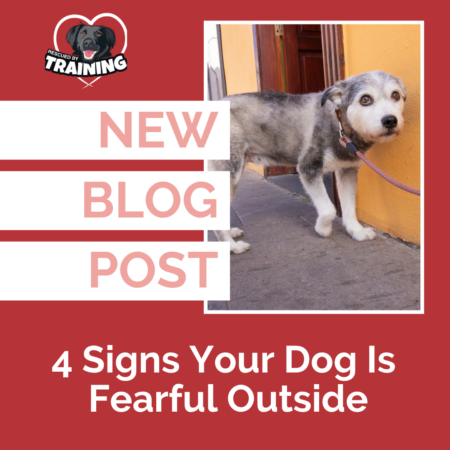

Owners often come to me saying their dog is “stubborn” or “lazy” on walks when what they are actually describing is likely a dog who is afraid. Being comfortable outside is a learned skill and one that is often missed during the critical socialization window as people are sometimes given outdated, dangerous advice to not take their young puppy outside before all their vaccines. This is not the current advice from behavior professionals and vets who specialize in behavior, yet many vets, rescues and breeders still give this guidance. Yes, your puppy can go out before all their vaccines.
When you have a dog who is afraid of being outside, we need to carefully help them learn that outside is safe which means never forcing them to do anything they are not consenting and willing to do. Fear is how animals instinctively avoid injury, disease and even death. So forcing your dog to be outside when they’re afraid will not teach them to “just get used to it” but could actually have longer lasting effects on their behavior and their relationship with you. Forcing them into a scary situation is NOT socialization and will not help them to be less afraid. Proper socialization ensures the dog feels safe at all times, is never forced or tested to see if they can “deal with it” and is always given the chance to say no and leave.
So how do we know if a dog is afraid outside? Here are four signs I look for when I suspect a dog is struggling with fear in the outside world.
- They won’t take high value food. A dog who happily takes chicken, cheese, or hot dogs in the house but refuses this good stuff outside is telling you something. Dogs who are fearful often won’t eat. They have bigger fish to fry – they’re more worried about not being hurt or surprised than the yummy steak you’re offering. This is an evolutionary trait and we see it in wildlife documentaries all the time. When zebras are trying to escape Nile crocodiles, the last thing those zebras are thinking about is where their next meal is coming from. When under stress, out bodies naturally channel resources like blood flow away from digestive and reproductive systems and into things like breathing and muscles to help avoid that threat. while So appetite is one of the first things to shut down when a dog is afraid or feels threatened, no matter how tempting the food is that you’re offering.
- They won’t potty outside. Dogs need to feel safe to potty. They need to be comfortable enough to allow their bladder and bowel muscles to relax to eliminate. So if you have a dog who won’t go outside, no matter how long they’re out there, or immediately goes once they’re back inside, this is a likely sign they don’t feel safe outside.
- They pancake, freeze, dart or pull to go home. This is one many owners recognize and what often triggers them to reach out for help. A dog who refuses to move past a certain point, who flattens/pancakes to the ground, darts uncontrollably or or pulls really hard to get back home is clearly telling us they’re uncomfortable. Like I’ve said before, fear isn’t disobedience so this isn’t just a matter of teaching proper leash walking skills. I had a client once who contacted me because her dog was trying to dart into traffic and she said he needed loose leash walking skills. But it wasn’t that at all. He was darting because he was panicked and was trying to avoid the city traffic. He didn’t need loose leash walking skills at all – he needed to feel safe in a city environment.
- They won’t sniff or explore. A happy, relaxed dog on a walk is investigating the world with their nose and is generally curious about their environment. Sniffing releases happy endorphins for dogs and usually makes them feel good so a dog who can’t relax enough to sniff usually isn’t feeling safe. To sniff, they have to put their heads down and not be hypervigilant about their environment, which, for a fearful dog is too scary to do. What if they get ambushed while they’re sniffing? Fearful dogs often pull ahead, constantly on alert, scanning their environment for any threats and can’t be bothered to sniff.
If this sounds like your dog, help is available! Fear of the outside world is common, and it is very trainable when it is addressed with the right approach. You can read one case study I did here and if you’re ready to get started working on this, my Conquering The Urban Jungle: Helping Dogs With Their Fear Of Being Outside self-paced course is a great place to start!
This course was created specifically for dogs like this. It walks you through nine self-paced modules with video lessons and my narration explaining exactly what is happening and what to do about it. You will follow three different dogs as case studies from where they started to what success looked like for each of them, along with downloadable resources that pair directly with each module. Course graduates also get access to a private support group exclusively for online course participants. Full details, including everything covered in the nine modules, incremental training plans, membership in the private community with scheduled office hours coaching sessions with me, and a special discounted rate on one private video session, are on the course page.
If you’re ready to take the first step towards helping your dog, you can schedule your session here!
If you would like to support my efforts and make a contribution to allow me to continue to create free resources like my blog and all of my other free resources, you can Buy Me A Coffee!

Thanks for being here!

(This post contains affiliate links. If you click the link, I earn a small commission, at no extra cost to you.)