
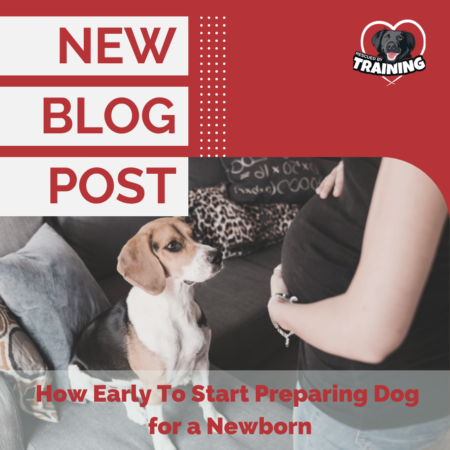

As a licensed Family Paws Parent Educator and a certified behavior consultant whose speciality is fear and aggression, I work with a lot of families with dogs and kids. If you’re expecting or trying to adopt or get pregnant, you may be wondering when you should start preparing for dog and baby. The answer is now! The more lead time and training time we have to help train behaviors, identify trouble areas and make environmental adjustments, the better it will be for everyone.
Behavior change takes time. If your dog has been sleeping with you in your bed for years, suddenly being kicked out because baby will be sleeping in a bedside bassinet likely is going to require an adjustment period. And you can’t have that be once baby comes home. Some people reach out before they are even pregnant or during the first trimester, which gives us the most time to work with. Others contact me a week or two before their due date, and some wait until their dog is already showing signs of distress after the baby has arrived. I always tell people it is far better to be proactive than reactive. With that in mind, here are five things you can start working on well before your baby arrives. This is not a complete list by any means. There is a lot more involved in preparing a dog for a new baby, but these five areas give you a strong starting point. And if you’re looking for more guidance, check out my Bringing Home Baby course here. You may also be interested in my Bringing Home Baby blog series here.
Five Things To Do For Your Dog Before Your Baby Arrives:
1. Check your dog’s medication stash and get check-ups done. Get a full physical exam and make sure your dog isn’t going to be due for any routine vet care, vaccines, bloodwork or prescription refills (including flea/tick and heartworm preventatives!) in the first month or two after you give birth. You will have enough on your plate without trying to squeeze in a vet appointment around a newborn’s schedule. Of course emergencies come up, but routine stuff you can plan ahead a bit.
2. Introduce your dog to the people who will be helping out. Think about who will be coming and going once the baby arrives, whether that is a doula, neighbor, dog walker, a night nurse, or extended family. Start socializing your dog to these people now, so their presence in your home feels normal well before the baby has arrived.
3. Review and practice basic skills. Truth time. It’s time to be really honest about how trained your dog really is. What might have been acceptable behavior before you were expecting a baby, may not be OK now. Jumping up, pawing for attention, barking, or ignoring a cue the first time you give it might have been fine before, but it is a different story once you are holding a newborn and cannot easily give a hand signal or reach for a leash. If you need help, reach out to me or another qualified trainer to talk through what skills you may need to work on and don’t forget to build in baby specific distractions!
4. Practice at home separation. Is your dog comfortable being separated by a gate, crate or closed door while you are home or does your dog have a little FOMO and has a meltdown if he’s not involved in everything? There will be times once the baby arrives that your dog won’t be part of the action, and we need to help make sure he’s comfortable with that so that it’s less stressful for everyone.
5. Get your dog on a flexible schedule. Most dogs thrive on predictability, and some struggle a lot when that predictability disappears. Once the baby is home, your schedule is going to be unpredictable, and your dog’s walk is not always going to happen right at 8am unless you are outsourcing that to a walker. In the months leading up to the birth, start varying meal times and walk times so your dog learns to be flexible. The more practice he gets with an inconsistent, “baby-friendly” schedule now, the more easily he will adjust once the baby actually arrives.
Of course, there is a lot more that goes into preparing a dog for a new baby than what I have covered here, but starting with these five areas will put you well ahead of where most families begin. As a Family Paws Parent Educator, I help families navigate every stage of this transition, from the day you bring baby home through toddlerhood. And as a certified behavior consultant, I am also here to help if your dog starts growling, avoiding, or showing other signs of discomfort once the baby is part of the household.
If you are ready for a structured, thorough approach, my Bringing Home Baby course walks you through exactly what to do and when to do it, so you are not guessing your way through this transition. Check it out here to get started while you still have the time to prepare properly.
If you’re ready to take the first step towards helping your dog, you can schedule your session here!
If you would like to support my efforts and make a contribution to allow me to continue to create free resources like my blog and all of my other free resources, you can Buy Me A Coffee!

Thanks for being here!

(This post contains affiliate links. If you click the link, I earn a small commission, at no extra cost to you.)