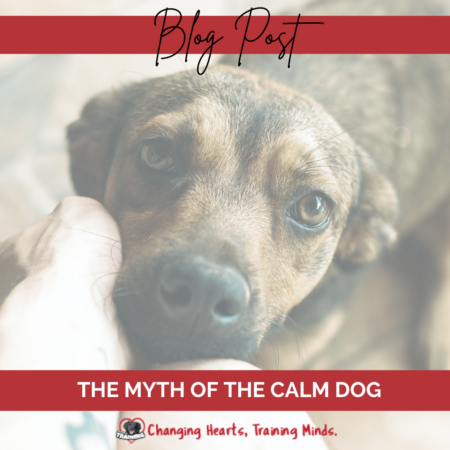

TV trainers have done a lot of damage over the last couple of decades, especially by promoting the idea that a “calm” dog is the ideal state we should expect at all times.
Sure, I like calm dogs when they’re seniors who enjoy snoozing, or when a dog is relaxed after exercise, play, enrichment, and training. But expecting a young, healthy, active dog to be perpetually calm is a red flag.
Often, “calm” actually signals fear or illness. Healthy young dogs are supposed to be active, curious, a little mischievous, and they should keep us on our toes. Dogs trained with aversive methods frequently look “calm” because they’re terrified of making a mistake. They live in a constant state of anxiety, afraid that the smallest movement, an ear flick, an eyebrow twitch, might trigger pain or intimidation. Others shut down entirely, stuck in learned helplessness because they’ve learned nothing they do can prevent the scary stuff.
Don’t get me wrong: I’m not advocating for chaos or tolerating inappropriate behaviors. Of course we teach manners and life skills so our dogs can fit politely into our lives. But I don’t ever want a dog to be “calm” because they’re afraid of what will happen if they aren’t. I’d much rather have a happy-go-lucky, social dog who gets excited when guests arrive, even if he struggles to keep it together, than a dog too afraid to move because he’s worried about a shock to the neck.
Another area where the pursuit of “calm” becomes problematic is separation anxiety. Yes, we absolutely want dogs who are comfortable and relaxed when alone. But that doesn’t mean forcing them into a down/stay on a mat for hours to “relax”. This approach not only risks poisoning your down/stay cue (because nobody will be there to reward the dog for holding it), but it’s also unrealistic and, frankly, unethical. No living being should be expected to lie perfectly still for hours without moving, drinking, or adjusting position.
From a training perspective, we know this isn’t how separation anxiety is resolved. Teaching a down/stay isn’t part of effective separation anxiety treatment. Success comes from a personalized, systematic protocol that helps your dog feel safe during absences by breaking them into small, manageable steps. If you’d like more information on separation anxiety and on what does and doesn’t help, download my free guide here.
So, train the skills that matter for daily life and connection with your dog, but don’t chase a state of perpetual calm. If you need help, I’m here.
If you would like to support my efforts and make a contribution to allow me to continue to create free resources like my blog and all of my other free resources, you can Buy Me A Coffee!

Happy training!