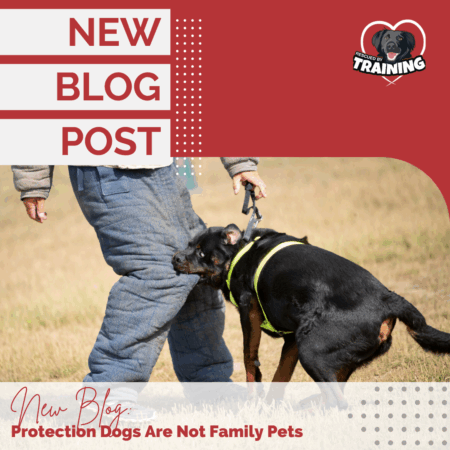

Occasionally I’ll get inquiries about a family wanting to get a protection dog. It’s natural to want to keep your family safe. In a world where news headlines can make us feel vulnerable, the idea of bringing home a trained “protection dog” may sound appealing. After all, who wouldn’t feel more secure with a loyal companion by their side who could ward off intruders?
But the reality is far more complicated, and far riskier, than most families realize.
To humans, context matters. We understand that the delivery driver at 2pm is not the same as a masked intruder at midnight. But to a dog, especially one trained to react aggressively toward unfamiliar people, the difference isn’t always so clear.
If your dog has been trained to view strangers as potential threats, that “protective” instinct can easily spill over into dangerous situations. A stranger is a stranger. Imagine your child having friends over to play. Or extended family coming for the holidays. Or a neighbor stopping by unexpectedly. If your dog has been conditioned to respond to strangers with suspicion or aggression, those everyday scenarios could end in fear, or worse, injury.
When a protection-trained dog cannot tell the difference between a threat and a guest, the fallout can be serious:
- Risk of bites or attacks: Friends, relatives, babysitters, and even your children’s playmates could be targeted simply for being “strangers.”
- Legal or financial consequences: A single bite incident could result in lawsuits, medical bills, mandatory reporting, or even your dog being seized or euthanized.
- Constant management: Families often end up isolating or crating their protection dog whenever visitors arrive, which reduces the dog’s quality of life and adds stress to the household.
- Emotional toll: Instead of feeling safer, many families live with the anxiety of wondering whether their dog will do what they were bred and trained to do.
A while ago, I was interviewed for a New York Times article on then President Biden’s German Shepherd biting Secret Service agents. While I wasn’t involved with that situation, there were two obvious observations I had – the dog had been training using aversive training methods (prong and shock collar) and was a German Shepherd, a breed intentionally bred to be guard dogs and therefore, even if this particular dog wasn’t purpose bred, there’s still a little genetic holdover in his DNA for a predisposition to be spooky or suspicious of strangers and unusual activities or movements, of which I’m sure there are a lot of at the White House.
If your goal is family safety, a protection dog is not the answer. The truth is, trained personal protection dogs are not suited to busy, social household life. They are working animals who require expert-level handling, clear structure, a way to actually work and be rewarded for that and constant management to prevent mistakes.
For most families, the best kind of “protection” a dog can offer isn’t aggression, it’s deterrence. A barking dog alone is often enough to discourage intruders. Pair that with common-sense security measures like alarm systems, cameras, and strong locks, and you’ll achieve peace of mind without putting your family, your visitors, or your dog at risk.
Protection dogs are not family pets. They’re specialized working animals whose training doesn’t translate well into the unpredictable, social world of family life. And most protection dogs are training using aversive methods, which are also not safe for living with families. If you’re looking for a safe, loving companion for your family, adopt or purchase a dog suited for companionship, not combat, and socialize well, and early.
If you’re struggling with your dog’s behavior, or need some guidance on getting a well matched dog for your family, reach out. I’m here to help.
If you would like to support my efforts and make a contribution to allow me to continue to create free resources like blog and all of my other free resources, you can Buy Me A Coffee!

Happy training!