
Because I work primarily with fearful dogs, I see a lot of people who describe their dog’s fear as a “problem” that needs “fixing.” But fear is not disobedience. The more I thought about this, the more I realized it highlights a bigger issue in dog training. This field is unregulated, and unqualified trainers are still causing real harm to dogs and their families.
Too often, these trainers promise to “fix” fear by shocking dogs into silence. Sure, when a dog gets shocked, they may stop barking. But that doesn’t mean the fear is gone. The dog now feels even more frightened because the scary thing has become linked with pain. That is not behavior modification. That is suppression. Behavior suppression is not behavior modification.
Unqualified trainers are only part of the problem. As a society, we judge people harshly when their dogs can’t handle every situation we place them in. Dogs bark, lunge, growl, or cower to show discomfort, and strangers shout things like “train your dog” or “he’s out of control.” We shame both dogs and owners for being less than perfect, and it all stems from the old idea that owners should “control” their dogs.
We’ve built a culture where dogs are expected to act like machines, always performing commands with flawless accuracy, regardless of their environment, genetics, or experiences. That expectation is unfair and impossible. No living creature can be 100 percent reliable. Yet people still judge and shame when dogs fall short, creating stress for both the human and the dog. And it puts an enormous strain on the human-dog relationship and can damage the bond.
The demand for robotic obedience traces back to dominance theory, a concept now discredited. That framework treated the human-dog relationship as one based on control and fear. The message was simple: do what I ask or be punished. That is not love, trust, or cooperation.
Thankfully, we now know there is a better way. Most pet owners only need a small set of truly essential skills. Is it life or death if your dog sits every single time you ask? No, not usually.
So am I saying not to train at all? Not exactly. I’m saying we should focus on what really matters. When we bring a dog into our home, we bring in an entirely different species. It’s not reasonable to expect them to behave like robots. Training should focus on manners, not strict obedience. Cooperation, not intimidation. Collaboration, not coercion. Cues, not commands.
And yes, use food. Lots of it. Your dog is not working to “please you” any more than you go to work solely for praise from your boss. You go for a paycheck. For dogs, food is that paycheck. It’s not bribery, it’s motivation.
Beyond basic cues, there are life skills that matter far more:
- Teaching dogs to feel safe around people, dogs, new places, and sounds
- Cooperative care for vet visits and grooming
- Comfort with being alone or confined when needed
- Wearing necessary gear like recovery collars or muzzles
- Building resilience and confidence so they can handle life without fear of punishment
- Trusting their humans to keep them safe and help them when situations are overwhelming
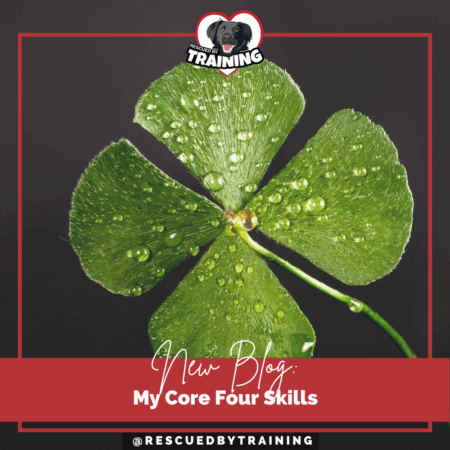
I do recommend training four core skills, because they can be life-saving:
-
Recall – Your dog should come back when called, especially if they slip a collar or harness.
-
Leave It – Prevents them from picking up something dangerous, like poisoned food or a dead animal.
-
Drop It – For when they already have something unsafe in their mouth.
-
Stay – A vital safety skill, for example if your dog darts across a street.
Everything else is extra.
Now hear me out, before you send me hate mail or leave angry comments.
This doesn’t mean we want dogs dragging people down the street. We can and should teach loose leash walking, but walks should also allow for sniffing, exploring, and being a dog. Heeling in perfect formation is not necessary for daily life.
We can teach polite greetings too. If a dog enjoys jumping up but it isn’t safe for all situations, we can add an invitation cue so they know when it’s okay. Again, this is about manners, not rigid obedience.
At the end of the day, training should not be about forcing perfection. It should be about helping dogs feel safe, heard, and supported. It should be about building trust. Your dog should know you will not put them in situations they cannot handle and that you will not demand obedience for every piece of food they earn.
If you’d like to learn how to build this kind of relationship with your dog, I’d love to work with you. Together, we can make a plan that focuses on safety, trust, and cooperation. Manners, not obedience.
You can schedule a session so we can review things one-on-one and come up with a plan for you and your dog.
If you would like to support my efforts and make a contribution to allow me to continue to create free resources like my blog and all of my other free resources, you can Buy Me A Coffee!

Happy training!