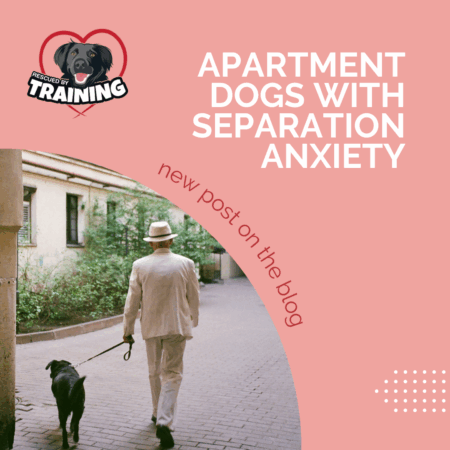

Many of my separation anxiety clients live in urban environments, so this is a topic I deal with often. If you live in an apartment, the first sign that your dog is struggling with being alone may not come from your dog at all, but from a note slipped under your door from a frustrated neighbor. Many people have no idea their dog has separation anxiety until there is a complaint, or worse, a threat of eviction.
Apartment living can create some additional challenges when it comes to separation anxiety training, but it is not all doom and gloom.
The pressure to “fix” separation anxiety quickly can be intense when housing is on the line. Unfortunately, this pressure sometimes leads people down a dangerous path, using tools like anti bark collars that hurt or scare dogs into silence. There is no quick fix for separation anxiety. Dogs who vocalize when left alone are communicating panic and distress, not misbehavior.
Punishing a dog for barking with shock, vibration, or citronella collars does not address the underlying anxiety. In fact, these tools often make a dog’s fear of being alone worse. The only way to permanently and effectively stop barking or vocalizing is to treat the anxiety itself. No panic means no vocalizing, and no need for painful or frightening tools.
Apartment dogs also often engage in watchdog barking. Hallway noises, people talking, doors closing, elevators, and dogs barking in nearby units can all trigger vocalizing. When a dog barks both due to outside sounds and separation anxiety, it can be difficult to tell the difference. Sound masking can be incredibly helpful in these situations. Using a TV, radio, or white noise machine can help dull or block outside noises that might otherwise trigger your dog.
That said, apartment living does come with some advantages for separation anxiety training. When it comes time to practice departures, apartment dogs do not need to cope with garage doors opening, car engines starting, or watching their person walk or drive down the driveway. Urban environments also tend to offer more support options, including doggy daycares, pet sitters, nearby neighbors, and dog friendly cafes and patios.
Many of my city living separation anxiety dogs are also more social and more comfortable in public. They are often well socialized to a wide range of people and environments, and frequently accompany their guardians on errands while suspending absences.
When I work with clients who live in apartments, I offer some additional guidance. You may notice a recurring theme.
Communicate with your neighbors.
Let them know you are aware that your dog struggles with being alone and that you are actively working on training. This shows you are being proactive and respectful. It also helps neighbors understand that your dog is dealing with an anxiety disorder, not misbehaving. Awareness often leads to empathy.
Explain the training process.
Let neighbors know that separation anxiety training may require you to step into the hallway frequently for real departures. You can explain this in person or leave a kind, handwritten note. Reassure them that you are not being strange or intrusive, just committed to helping your dog.
Set expectations during hallway training.
If you do not stop to chat while training, it is not rudeness. Your dog needs to believe you are truly gone. If explaining this feels uncomfortable, consider carrying a small sign that says something like, “Sorry, can’t talk. I’m training my dog and need to stay quiet.”
Ask for help.
Some neighbors work from home and may be open to helping with dog sitting. Others may love the companionship of a dog but cannot have one of their own. Posting a friendly “Help Wanted” sign in your lobby with a photo of your dog, basic information, and your needs can benefit everyone involved. You may even meet neighbors you have never spoken to before. Once I had two clients in the same building who are both working through separation anxiety training and helping each other with coverage.
If you need ideas for suspending absences, download my free checklist, 26 Ways To Suspend Absences
Say thank you.
A small gesture like baked goods, a coffee shop gift card, or Uber Eats can go a long way in expressing appreciation for patience and understanding.
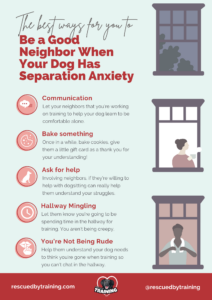
As with most relationships in life, communication is the key to harmonious living. Being transparent with your neighbors about your dog’s struggles can help everyone feel more at ease. Remember that apartment living means shared space. Not everyone enjoys hearing a dog bark, just as not everyone enjoys hearing a baby cry. Respecting that reality matters.
Download my free resource, Be a Good Neighbor, for my top tips on navigating apartment living when your dog has separation anxiety.
If you think your dog may have separation anxiety or you are looking for guidance, check out my self paced and affordable course, Separation Anxiety Training Foundations (SATF).
If your dog is struggling when left alone, reach out today and schedule your assessment. Recovery from separation anxiety is possible and I can help you and your dog’s quality of life, strengthening your relationship and bringing relief to both of you. Don’t you both deserve that?
If you would like to support my efforts and make a contribution to allow me to continue to create free resources like my blog and all of my other free resources, you can Buy Me A Coffee!

Happy training,